
Thermal Imaging for Electrical Equipment Condition Monitoring and Preventive Maintenance.
Commercial electrical systems are essential to building operations. Electrical distribution equipment, connections, breakers, and other components can develop abnormal operating temperatures associated with various electrical or mechanical conditions.
At Southeast Building Consultants, LLC, we offer commercial electrical infrared inspection services to help identify unusual thermal patterns in accessible electrical equipment.
Infrared thermography can provide useful information for preventive maintenance programs, equipment condition monitoring, and commercial property evaluations.
Electrical thermography is available as a stand-alone service or as an optional addition to a Property Condition Assessment (PCA), Commercial Building Inspection, or Facility Condition Assessment (FCA), subject to the agreed scope and appropriate safety arrangements.
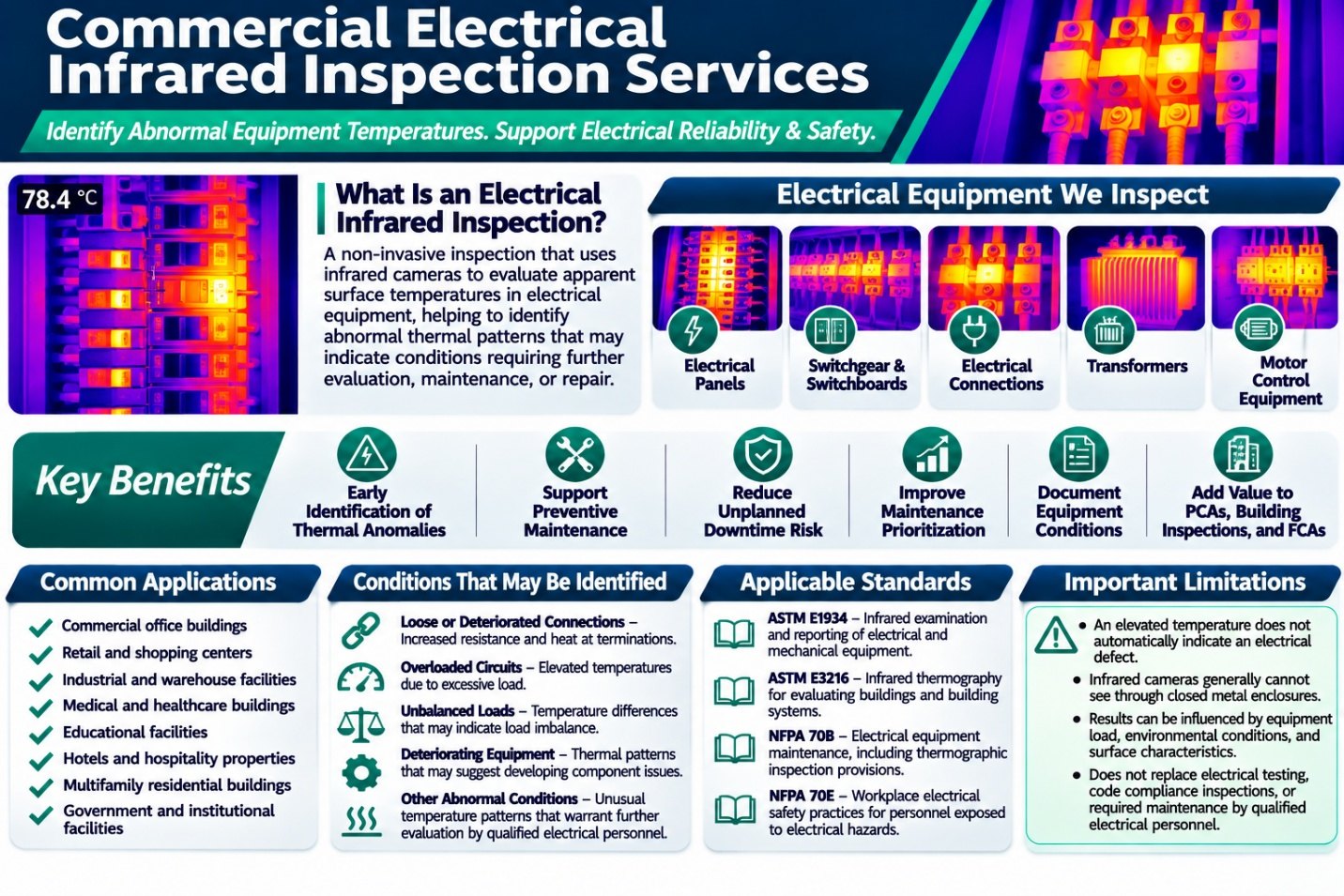
What Is an Electrical Infrared Inspection?
An electrical infrared inspection uses specialized thermal imaging equipment to evaluate apparent surface temperatures and temperature differences in electrical components.
Abnormal thermal patterns may be associated with conditions such as:
- Loose or deteriorated electrical connections
- Increased electrical resistance
- Overloaded circuits or components
- Unbalanced electrical loads
- Deteriorating equipment
- Other operating conditions requiring further investigation
An elevated temperature does not automatically indicate an electrical defect.
Temperature differences must be interpreted in relation to equipment design, electrical loading, environmental conditions, and other relevant factors.
What Electrical Equipment Can Be Evaluated?
Depending on the inspection scope and safe accessibility, electrical infrared surveys may include:
Electrical Distribution Panels
Thermal imaging may identify unusual temperature patterns associated with accessible breakers, connections, and distribution components.
Switchgear and Switchboards
Infrared inspections may help identify abnormal operating temperatures in accessible equipment components.
Electrical Connections
Connections with unusual thermal patterns may warrant further evaluation by qualified electrical personnel.
Transformers
Thermal imaging may help identify unusual surface temperature patterns in accessible transformer components.
Motor Control Equipment
Motor starters, controllers, and associated electrical equipment may be evaluated when included in the inspection scope.
Other Electrical Components
Additional equipment may be evaluated when appropriate access, operating conditions, and personnel qualifications are available.
Why Are Electrical Infrared Inspections Important?
Electrical components may develop abnormal operating conditions before visible damage becomes apparent.
Infrared thermography can support maintenance programs by helping identify equipment requiring further investigation.
Potential benefits include:
Early Identification of Thermal Anomalies
Recognize unusual temperature patterns that may indicate developing equipment concerns.
Support for Preventive Maintenance
Help maintenance personnel identify components that may require additional evaluation or service.
Reduced Unplanned Downtime Risk
Timely investigation of abnormal thermal findings may help reduce the likelihood of certain equipment failures.
Improved Maintenance Documentation
Thermal images can provide records for monitoring and comparing equipment conditions.
Better Maintenance Prioritization
Documented findings can support decisions about additional testing, repairs, or replacement.
Thermal imaging does not guarantee the prevention of equipment failures or electrical incidents.
How Does an Electrical Infrared Inspection Work?
Step 1 — Define the Equipment Scope
We review the equipment to be evaluated, inspection objectives, operating conditions, and site-specific safety requirements.
Step 2 — Coordinate Safe Access
Appropriate qualified electrical personnel and safe access arrangements are established as required.
Step 3 — Evaluate Operating Conditions
Electrical equipment is generally evaluated under representative operating loads when practical.
Step 4 — Perform Infrared Observations
Accessible equipment is examined for unusual temperature patterns within the agreed scope and applicable safety requirements.
Step 5 — Document Thermal Findings
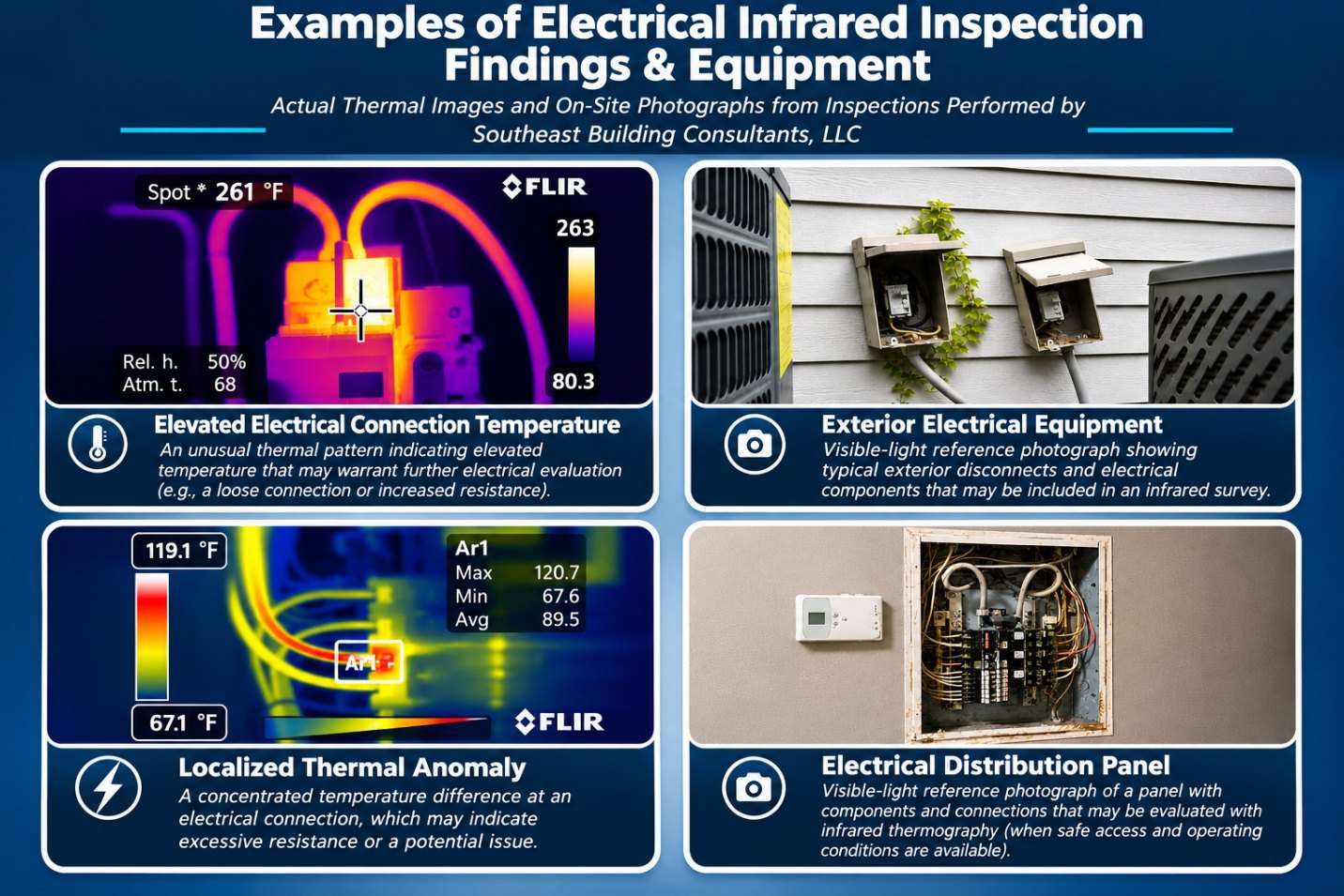
Relevant anomalies are documented with thermal images, visible-light photographs, and supporting information.
Step 6 — Prepare the Report
The report identifies observed thermal anomalies, inspection limitations, and recommendations for further electrical evaluation when appropriate.
Electrical Infrared Inspection Standards
Relevant technical and safety references may include:
ASTM E1934 Guidance for infrared examination and reporting involving electrical and mechanical equipment.
ASTM E3216 General guidance for infrared evaluation of building systems and equipment.
NFPA 70B Electrical equipment maintenance requirements, including applicable condition monitoring and thermographic inspection provisions.
Infraspection Standard for Infrared Inspection of Electrical Systems and Rotating Equipment
The applicable requirements depend on the equipment, inspection activities, work environment, and current adopted standards.
Certified Thermography Professionals and Technical Support
Our infrared services are supported by:
- Level I Infrared Thermography Certification — Infraspection Institute
- Affiliated Level III Thermography Consulting Support — ITC/FLIR
Electrical infrared inspection procedures and personnel involvement are determined by the equipment, electrical hazards, and project scope.
Qualified electrical personnel may be required for access, operation, testing, or other electrical work.
Electrical Safety and Inspection Limitations
Electrical thermography involves potentially hazardous equipment.
Infrared inspections should be carried out using appropriate electrical safety procedures and personnel qualifications.
The inspection does not automatically include opening energized electrical enclosures, removing protective covers, operating electrical equipment, or performing electrical repairs.
Those activities must be separately authorized, planned, and performed by appropriately qualified personnel.
Infrared imaging does not determine electrical code compliance, establish equipment safety, or replace electrical testing.
Equipment loading, accessibility, enclosure construction, surface emissivity, and environmental conditions may affect results.
Frequently Asked Questions
Can infrared inspections detect electrical problems before equipment fails?
Thermal imaging may identify abnormal operating temperatures associated with developing equipment concerns. However, not every electrical defect produces a detectable thermal anomaly.
Does electrical equipment need to be operating during the inspection?
Representative operating loads are often important for identifying meaningful thermal patterns. The required conditions depend on the equipment and inspection objectives.
Can infrared cameras see through electrical panels?
No. Infrared cameras generally cannot see through ordinary metal electrical enclosures. Safe access or suitable infrared viewing windows may be necessary.
Does an electrical infrared inspection replace electrical testing?
No. Infrared thermography is a condition monitoring method and does not replace appropriate electrical testing or maintenance.
Can electrical thermography be included with a commercial building inspection?
Yes, when the scope, equipment access, personnel qualifications, and safety requirements have been established.
Southeast Building Consultants, LLC offers commercial electrical infrared inspection services with appropriate technical support and project-specific safety requirements.